

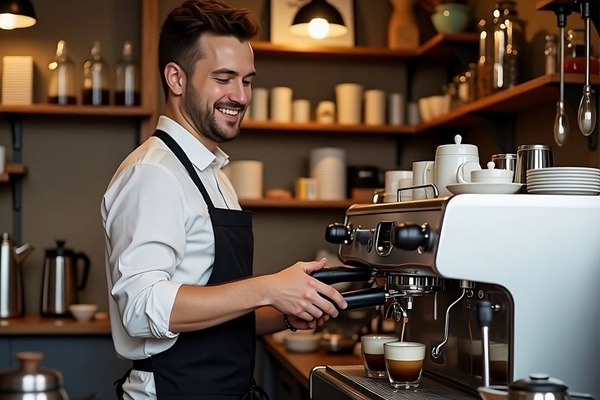
Dubai doesn’t do anything halfway — and that includes coffee. Walk through any neighbourhood in this city, from the boutique lanes of Al Quoz to the gleaming corridors of Dubai Mall, and you’ll find specialty cafés packed from morning to midnight. The UAE’s café market is now valued at over AED 5 billion, and that number keeps climbing. For anyone passionate about coffee, that’s not just a statistic — it’s an open door.
If you’ve been searching for how to become a barista in Dubai, you’ve landed in the right place. This guide covers everything: the skills you need, the best barista courses in Dubai, what the job actually pays, and how to land your first role in one of the world’s most exciting coffee markets.
Why Dubai Is One of the Best Places to Build a Barista Career
Before we get into the how, let’s talk about the why — because Dubai’s appeal goes far beyond the skyline.
The city is home to more than 500 specialty cafés, countless five-star hotel coffee bars, and a multicultural population of 3.5 million people who take their coffee seriously. Whether it’s a perfectly pulled espresso at a boutique roastery in Jumeirah or a hand-crafted cold brew at a hotel lounge in Downtown, quality is non-negotiable here.
Here’s what makes Dubai stand out for aspiring baristas:
Tax-free income. Every dirham you earn goes straight to your pocket. With no income tax in the UAE, your effective take-home is significantly higher than in many Western countries.
High demand, steady supply of jobs. Skilled baristas in Dubai are genuinely in short supply. Hotels, airport lounges, café chains, and independent specialty shops are all actively hiring — and many offer housing allowances, transport, meals, and even relocation packages.
Career acceleration. In many markets, you might spend years behind the counter before moving into a head barista or café manager role. In Dubai, career progression can happen much faster, especially if you come in certified and hungry to grow.
Global exposure. Serving customers from every corner of the world in a city that hosts millions of tourists annually is an education in itself. You’ll build soft skills alongside your coffee craft that most baristas never get the chance to develop.
What Does a Barista in Dubai Actually Do?
A professional barista in Dubai is much more than someone who presses a button on an espresso machine. In a city where guests expect perfection, your role covers a wide range of responsibilities:
- Extracting espresso shots with precision, adjusting grind, dose, and extraction time for consistency
- Steaming and texturing milk to create flat whites, lattes, cappuccinos, and specialty drinks
- Crafting latte art — from basic hearts and rosettas to the advanced 3D designs increasingly expected at premium venues
- Operating, cleaning, and maintaining commercial espresso machines and grinders
- Understanding coffee origins, processing methods, and roast profiles well enough to talk about them with customers
- Maintaining hygiene standards in line with UAE food safety laws (HACCP compliance)
- Working fast in high-volume, often high-pressure environments — Dubai’s busiest cafés don’t slow down
- Contributing to menu development and seasonal drinks at more senior levels
If all of that sounds like a lot — it is. But it’s also what makes the role genuinely rewarding. There’s real craft here.
Skills You Need to Become a Barista in Dubai
You don’t need a degree to become a barista. But you do need a specific set of skills, and in Dubai’s competitive job market, proving those skills with a recognised certification puts you ahead.
Technical coffee skills are the foundation: espresso extraction, milk texturing, understanding of coffee varieties and brewing methods, and equipment maintenance. These are learnable — and they’re exactly what a good barista training course in Dubai will teach you.
Customer service instincts matter just as much. Dubai employers rate emotional intelligence highly. You’re often serving guests who are on holiday or in a hurry before a meeting — reading the room and delivering warmth under pressure is part of the job description.
Attention to detail separates average baristas from exceptional ones. A properly calibrated grinder, a correctly timed shot, a well-textured milk jug — small things that matter enormously when your café’s reputation depends on consistency.
Physical stamina is underestimated. Baristas in Dubai typically work 8 to 10-hour shifts, often on weekends and public holidays. Standing for long stretches, moving quickly, and staying sharp is simply part of the role.
Basic hygiene and food safety knowledge is non-negotiable. UAE food laws are strict, and HACCP compliance will often be expected before you’re allowed behind the counter of any professional establishment.
Barista Courses in Dubai: Your Certification Options
Getting formally trained is the single biggest step you can take toward landing a barista job in Dubai. Here’s a breakdown of the main certification routes:
KHDA-Approved Barista Training
The Knowledge and Human Development Authority (KHDA) is Dubai’s education regulatory body. A KHDA-certified barista certificate carries weight with local employers because it’s government-attested and reflects a standardised level of competency.
Several institutions offer KHDA-approved programs, including We Aspire, which runs a 42-hour course across Junior, Senior, and Head Barista levels — structured for complete beginners all the way up to those aiming for supervisory roles. The program includes all equipment, ingredients, and course materials, and runs on weekday, weekend, and custom batch schedules.
City & Guilds Accredited Programs
City & Guilds is a UK-based international awarding body whose certifications are recognised globally. ICCA Dubai offers a City & Guilds-accredited International Award in Barista Skills — a five-day intensive that takes students from coffee origins and roasting through to espresso extraction, latte art, cold brew, machine maintenance, and even the basics of running a coffee business. This is a strong credential for anyone eyeing roles in luxury hotels or international café groups.
Espresso Academy Programs
The Espresso Academy, headquartered in Italy, operates in Dubai through local partners and offers internationally recognised coffee training that follows the Espresso Academy Method — a globally standardised curriculum that prepares students for high-level coffee careers beyond the UAE.
Short Courses and Workshops
If you’re not ready to commit to a full certification program, 2-day beginner barista workshops (available in locations like Al Quoz) offer hands-on machine practice and foundational technique. These are great for testing your interest before investing in a full qualification. Just be aware: while a workshop looks good on a CV as a starting point, most Dubai employers hiring for career roles will expect recognised certification.
Step-by-Step: How to Become a Barista in Dubai
Here’s a practical roadmap you can start following today.
Step 1 — Choose and Complete a Certified Barista Course
Research KHDA-approved or internationally accredited programs in Dubai. Consider your current skill level: if you’re a complete beginner, look for structured multi-level programs. If you already have some café experience, a City & Guilds or Espresso Academy qualification might accelerate your career faster.
Step 2 — Get Hands-On Practice
Classroom and workshop time is valuable, but muscle memory comes from repetition. If your training program includes a mock café setup or supervised practical sessions, throw yourself into every hour of it. If possible, volunteer at a local café or offer to help a barista friend — informal practice time adds up.
Step 3 — Build Your Coffee Knowledge
Dubai’s specialty café scene attracts customers who know their coffee. Study origin regions (Ethiopia, Colombia, Yemen), processing methods (washed, natural, honey), and brewing techniques (espresso, pour-over, AeroPress, cold brew). You don’t need to be a Q Grader, but being able to hold an intelligent conversation about what’s in the cup makes a real difference at interview.
Step 4 — Get Your Documents in Order
To work legally in the UAE, you’ll need a valid visa. If you’re already in Dubai, check your residency status and whether your current visa allows employment. Many hospitality employers in Dubai offer visa sponsorship and will guide you through the process — but you’ll need a valid passport and the relevant documentation ready. Some roles may also require a food handler’s permit in line with UAE health regulations.
Step 5 — Build a Strong CV
Keep it clean and specific. Lead with your certification — name the awarding body and the qualification level. Follow with any practical experience, even informal work. Include your equipment knowledge (which espresso machines you’ve trained on), any latte art skills, and your customer service background. Don’t pad it out — Dubai hiring managers review a lot of applications, and clarity wins.
Step 6 — Start Applying Strategically
Target your applications. Look at specialty independent cafés, five-star hotel coffee bars (Jumeirah Group, Marriott, Four Seasons all have significant F&B operations in Dubai), international café groups operating in the UAE, and airport lounges. Job boards like Indeed UAE, GulfTalent, and Bayt.com regularly list barista roles. LinkedIn is also worth checking for hospitality-focused positions.
Step 7 — Ace the Practical Interview
Many Dubai cafés will ask you to demonstrate your skills in person — a “bar test” where you pull espresso shots, texture milk, and perhaps create a simple latte art design. This is where your training pays off. Arrive prepared, calm, and clean. Treat it like a shift, not an audition.
Barista Salary in Dubai: What to Expect
Salaries for baristas in Dubai vary depending on experience, venue type, and whether benefits are included in the package.
Entry-level baristas typically earn in the range of AED 2,500 to AED 4,000 per month. With a couple of years of experience, that can rise to AED 4,000 to AED 7,000 — and senior or head barista roles at premium venues regularly command AED 8,000 to AED 12,000 per month.
Here’s the thing about Dubai packages that job listings elsewhere don’t always make clear: benefits significantly change the real value of a role. Housing allowances, transport, meals on shift, flights home once a year, and health insurance are common in hotel and chain café positions. Factor these in when comparing offers.
Tips are also meaningful in Dubai, particularly in hotel coffee bars and upscale standalone cafés — adding AED 500 to AED 1,500 per month for baristas in busy venues is not uncommon.
The ceiling for a head barista salary in Dubai, particularly in luxury hotels or specialty café management, can reach well above AED 10,000 monthly when the full compensation package is accounted for.
Career Progression: Where Can a Barista Career Take You in Dubai?
Becoming a barista is often just the beginning. Dubai’s hospitality and F&B sector offers real upward mobility:
Junior Barista → Senior Barista → Head Barista: The natural progression, with pay increases and greater responsibility for training junior staff and maintaining quality standards.
Coffee Trainer / Educator: Experienced baristas with excellent communication skills often move into training roles — either within a café group or independently, teaching the next wave of barista students.
Café Manager: A natural evolution for baristas who want to run the whole operation — staffing, inventory, supplier relationships, and the bottom line.
Coffee Consultant: High-level baristas with expertise in sourcing, roasting, and menu development sometimes move into consultancy, helping new cafés and hotels build their coffee programs from scratch.
Business Owner: Dubai’s business environment is genuinely supportive of entrepreneurs. Some of the city’s best-loved independent specialty cafés were started by baristas who spent a few years learning the trade before opening their own doors.
Dubai’s Coffee Culture: What You’re Joining
To work as a barista in Dubai is to be part of something genuinely exciting. The city’s coffee scene has evolved dramatically over the past decade — moving from chain-dominated high streets to a vibrant ecosystem of specialty roasters, single-origin espresso bars, and cafés that take coffee as seriously as a Michelin-starred kitchen takes food.
Areas like Al Quoz, Jumeirah, and Downtown Dubai have become hubs for coffee culture, with a new generation of café-goers who know the difference between a washed Ethiopian Yirgacheffe and a natural Guatemalan, who ask about extraction ratios, and who photograph their latte art before they drink it.
This isn’t just a job market. It’s a scene. And it’s growing.
For more details please visit our barista training page.
Frequently Asked Questions
Do I need prior experience to enrol in a barista course in Dubai?
No. Most beginner barista programs in Dubai are open to complete newcomers, including school leavers. You bring the enthusiasm; the course provides the rest.
How long does it take to become a certified barista in Dubai?
It depends on the program. Short workshops run 2 days. The ICCA five-day intensive gets you a globally recognised qualification by the end of the week. Comprehensive multi-level programs like those at We Aspire run approximately 42 hours across several weeks. From zero to job-ready can realistically take as little as two to four weeks.
Is a KHDA certificate required to work as a barista in Dubai?
It’s not legally mandated, but a KHDA-certified qualification is strongly preferred by most professional employers in Dubai. It signals to a hiring manager that your training meets a regulated standard — which matters in a city where quality is everything.
Can I work as a barista in Dubai without speaking Arabic?
Yes. Dubai is one of the world’s most multilingual work environments, and English is the dominant language of business and hospitality. Arabic is an asset, not a requirement.
What is the average barista salary in Dubai?
Entry-level baristas in Dubai earn approximately AED 2,500 to AED 4,000 per month. With experience and a senior or head barista role, this can reach AED 8,000 to AED 12,000 or more, particularly in luxury hotel positions with full benefit packages.
The Bottom Line
Dubai’s coffee scene is one of the most dynamic in the world, and the demand for skilled, certified baristas is only growing. Whether you’re starting from scratch or transitioning from another hospitality role, the pathway is clear: get properly trained, get certified, build your practical skills, and put yourself in front of the right employers.
The investment in a good barista course in Dubai pays back quickly — not just in earnings, but in the kind of work that genuinely satisfies. There’s something about crafting a perfect cup in a city that never stops moving that feels, when you get it right, like exactly where you’re supposed to be.
Ready to start your barista journey in Dubai? Explore our KHDA-approved barista training programs and take the first step toward a coffee career in the UAE.