

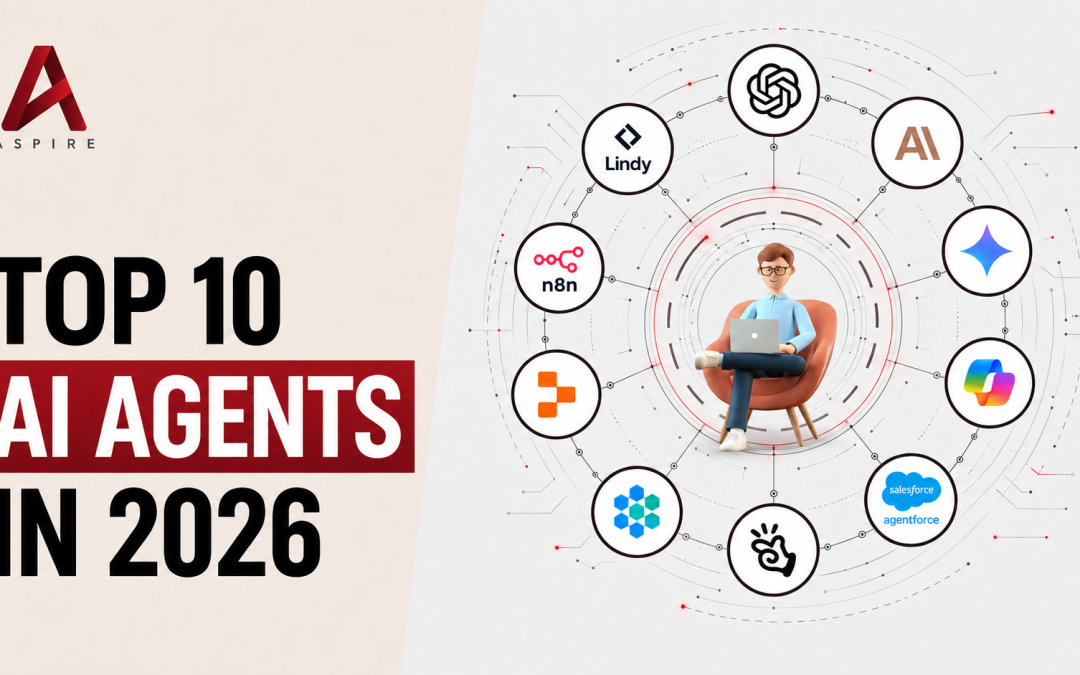
Artificial Intelligence has evolved far beyond simple chatbots. Today’s AI agents don’t just answer questions—they can research information, operate software, write and test code, update customer records, create presentations, and execute complex multi-step workflows with minimal human intervention.
That distinction matters.
A traditional chatbot waits for your next prompt. An autonomous AI agent can understand a goal, create a plan, select the right tools, and complete tasks independently while involving humans only when approval is needed.
However, there’s one skill that determines how effectively these AI systems perform: prompt engineering.
Whether you’re using ChatGPT, Claude, Gemini, or advanced AI agents, the quality of your prompts directly impacts the quality of the results. This is why Prompt Engineering has become one of the fastest-growing AI skills for professionals, marketers, developers, business owners, and students.
If you’re looking to build practical AI skills, enrolling in a Prompt Engineering Course in Dubai can help you learn how to communicate effectively with AI, automate repetitive tasks, create high-performing prompts, and leverage AI agents to increase productivity across different industries.
With hundreds of AI tools entering the market, it’s easy to get overwhelmed by marketing claims. No AI agent is the best at everything. Some excel at coding, while others are designed for research, sales, customer service, marketing, workflow automation, or enterprise operations.
In this guide, we’ll compare the 10 Best AI Agents in 2026, evaluating each platform based on real-world performance, integrations, automation capabilities, ease of use, security, and the types of tasks they handle best. Whether you’re an AI beginner or someone considering a Prompt Engineering Course in Dubai, this comparison will help you choose the right AI tools to stay ahead in the rapidly evolving AI landscape.
The Best AI Agents in 2026 at a Glance
| Rank | AI Agent | Best For | Technical Level |
|---|---|---|---|
| 1 | ChatGPT Work | Complex knowledge work and deliverables | Beginner-advanced |
| 2 | Claude Cowork | Files, analysis and computer-based work | Beginner-advanced |
| 3 | Google Gemini | Google ecosystem and multimodal tasks | Beginner-advanced |
| 4 | Manus AI | Research, websites and presentations | Beginner |
| 5 | Microsoft Copilot Studio | Microsoft 365 business automation | Intermediate |
| 6 | Salesforce Agentforce | Sales, service and CRM automation | Intermediate-advanced |
| 7 | Devin | Autonomous software engineering | Advanced |
| 8 | Replit Agent 4 | Building and launching applications | Beginner-advanced |
| 9 | n8n AI Agents | Custom AI workflow automation | Intermediate-advanced |
| 10 | Lindy | No-code business and administrative agents | Beginner |
What Is an AI Agent?
An AI agent is an artificial intelligence system that can pursue a goal by interpreting information, making decisions, using tools and taking actions.
Most useful AI agents combine five elements:
- A language or reasoning model
- Instructions and defined objectives
- Access to tools, applications or APIs
- Memory or working context
- Guardrails and human approval controls
For example, a normal chatbot might explain how to prepare a sales report. An AI agent could retrieve the sales data, analyse performance, produce the report and prepare a presentation.
This shift from answering to acting is why searches for agentic AI, autonomous AI agents and AI workflow automation have become central to the 2026 technology conversation. Google Cloud’s 2026 trends report identifies agent-supported productivity and agentic workflows as major business priorities. Google Cloud AI Agent Trends 2026
1. ChatGPT Work – Best Overall AI Agent for Knowledge Work
ChatGPT Work is OpenAI’s current agentic workspace for complex, multi-step projects. It replaces the earlier ChatGPT Agent experience, which is no longer available as a separate feature.
The platform can gather information across connected applications, analyse files and produce finished deliverables such as spreadsheets, documents, presentations and web applications. It can also divide larger assignments into smaller steps and continue working on them for extended periods. OpenAI: Introducing ChatGPT Work
Best Features
- Multi-step research and analysis
- Connected application workflows
- Document, spreadsheet and presentation creation
- Long-running project execution
- Coding and web-application development
- Shared workspace agents for organisation
Best For
Consultants, marketers, analysts, managers, developers and teams that need one general-purpose AI workspace.
Main Limitation
Broad autonomy creates risk if access and approval rules are poorly configured. Teams should limit sensitive data access and require confirmation before external or irreversible actions.
Verdict: The strongest all-round choice for complex knowledge work and finished business deliverables.
2. Claude Cowork – Best for Files and Computer-Based Tasks
Claude is particularly strong in reasoning, document analysis and coding. Its computer-use capability allows it to interact with desktop environments through screenshots, mouse actions and keyboard input. Claude Cowork extends this into practical workplace tasks involving local files and development tools.
Best Features
- Strong long-form reasoning
- Detailed document and code analysis
- Desktop computer interaction
- File-based workflows
- Coding and development support
- Human-readable explanations
Best For
Researchers, writers, developers and professionals working with large documents or complicated local files.
Main Limitation
Computer control requires careful supervision. Visual interfaces change, and any agent using mouse and keyboard actions can select the wrong element.
Verdict: One of the best AI agents for analysis-heavy work, coding and local computer tasks.
3. Google Gemini – Best for the Google Ecosystem
Gemini’s advantage is its connection to Google’s wider ecosystem. Its agentic capabilities span search, coding, research, browser interaction and Google applications.
Google’s computer-use model allows developers to build agents that interact with web and mobile interfaces. Gemini’s agent mode can also combine browsing, research and application integrations to execute multi-step tasks.
Best Features
- Google Search integration
- Multimodal understanding
- Google Workspace compatibility
- Browser and interface interaction
- Coding-agent capabilities
- Research and planning
Best For
Businesses already using Gmail, Google Drive, Docs, Sheets, Google Cloud and other Google services.
Main Limitation
Gemini is spread across several products and subscription levels. Users must check which agentic capabilities are included in their specific plan.
Verdict: The most natural AI-agent option for organisation deeply invested in Google’s ecosystem.
4. Manus AI – Best for Research and Rapid Deliverables
Manus positions itself as an “action engine” that executes tasks instead of only returning answers. Its tools cover websites, presentations, design, research and browser-based work.
Best Features
- Deep and wide research
- Website creation
- Presentation generation
- Browser operation
- Data organisation
- Accessible interface for non-technical users
Best For
Entrepreneurs, researchers, content teams and professionals who want results without constructing complex workflows.
Main Limitation
Users should verify citations, calculations and external actions rather than treating autonomous output as automatically correct.
Verdict: A powerful general-purpose option for producing research, presentations and web-based deliverables quickly.
5. Microsoft Copilot Studio – Best for Microsoft 365 Automation
Microsoft Copilot Studio is a graphical, low-code environment for creating, testing and deploying custom AI agents. Agents can connect with organisational data and be published independently or through Microsoft 365 Copilot.
Its strongest advantage is enterprise integration. Businesses already using Microsoft 365, Teams, SharePoint, Dynamics and Power Platform can build agents inside a familiar governance environment.
Best Features
- Natural-language agent creation
- Graphical agent builder
- Microsoft 365 integrations
- Prebuilt and custom connectors
- Enterprise governance
- Agent flows and business logic
Best For
Medium and large organisation operating primarily within the Microsoft ecosystem.
Main Limitation
Licensing and architecture can become confusing. Poorly planned agents may create another layer of fragmented automation.
Verdict: One of the best enterprise AI-agent platforms for Microsoft-focused organisation.
6. Salesforce Agent force – Best for Sales and Customer Service
Salesforce Agent force creates autonomous agents grounded in customer and business data. These agents can answer questions, retrieve relevant information, develop action plans and execute tasks within defined guardrails.
Common applications include lead qualification, customer support, sales assistance, case management and marketing automation.
Best Features
- Native Salesforce integration
- CRM-aware decision-making
- Sales and service automation
- Customer-facing agents
- Business-data grounding
- Enterprise security controls
Best For
Companies already using Salesforce as their main CRM and customer-data platform.
Main Limitation
Agentforce makes less sense for small businesses without an established Salesforce implementation. Deployment quality depends heavily on clean CRM data and well-designed processes.
Verdict: The strongest specialist AI agent for Salesforce-centred sales, service and CRM workflows.
7. Devin – Best Autonomous AI Agent for Software Engineering
Devin is an autonomous software-engineering agent developed by Cognition. It can plan technical work, write code, run tests and contribute to production repositories.
Unlike a simple coding assistant that suggests the next few lines, Devin is designed to complete larger engineering assignments on its own cloud machine.
Best Features
- Autonomous coding tasks
- Bug investigation and fixing
- Testing and validation
- Codebase migrations
- Parallel engineering assignments
- Integration with development workflows
Best For
Software teams with established repositories, review processes and clearly defined engineering tasks.
Main Limitation
It is not a replacement for technical leadership, architecture decisions or code review. Weak specifications can produce weak implementations at greater speed.
Verdict: A leading specialist platform for delegating defined software-engineering work.
8. Replit Agent 4 – Best for Building and Launching Applications
Replit Agent turns plain-language instructions into working applications. It can write code, configure infrastructure, test the result and publish the project within the Replit environment.
Agent 4 adds design controls, task coordination and parallel execution across application components.
Best Features
- Full-stack application generation
- Integrated hosting and infrastructure
- Visual design canvas
- Parallel task execution
- Mobile and web development
- Beginner-friendly publishing
Best For
Founders, product managers, students and developers who want to move from an idea to a functioning prototype quickly.
Main Limitation
AI-generated applications still require security testing, database review, performance validation and maintainable architecture. “It works” does not mean “it is production-ready.”
Verdict: One of the fastest AI coding agents for turning product ideas into live applications.
9. n8n AI Agents – Best for Custom Workflow Automation
n8n combines deterministic automation with AI decision-making. Its visual workflows can connect AI agents to business applications, APIs, databases, CRMs and communication platforms.
The platform supports memory, tools, human approval steps, logs and self-hosting. This provides more control than handing an entire business process to an opaque autonomous agent.
Best Features
- Visual workflow builder
- Extensive application integrations
- Custom code support
- Human approval steps
- Self-hosting
- Traceable workflow execution
Best For
Technical marketing teams, operations departments, developers and automation agencies.
Main Limitation
n8n is flexible, but reliable production automation requires process design, error handling, access controls and monitoring.
Verdict: The best choice for organisations that need custom, visible and controllable AI workflow automation.
10. Lindy – Best No-Code AI Agent for Small Businesses
Lindy focuses on no-code AI agents for business workflows such as email management, scheduling, customer support, lead generation, follow-ups and CRM updates.
Users can describe a workflow and configure the actions without building the underlying system from scratch.
Best Features
- No-code setup
- Email and calendar automation
- Sales follow-ups
- CRM updates
- Customer-support workflows
- Administrative automation
Best For
Small businesses, agencies, sales teams and professionals without dedicated developers.
Main Limitation
No-code convenience can reduce flexibility. Businesses with unusual processes or strict infrastructure requirements may outgrow the available templates and integrations.
Verdict: A practical entry point for small teams that want a digital operations assistant without developing one internally.
ChatGPT vs Claude vs Gemini: Which Is Best?
Choose ChatGPT Work if you want the strongest general-purpose environment for research, coding and finished deliverables.
Choose Claude if your work centres on large documents, detailed reasoning, local files or complex code.
Choose Gemini if your business depends heavily on Google Search, Gmail, Drive, Docs, Sheets and Google Cloud.
The best option is determined by workflow compatibility, not online hype.
Which AI Agent Is Best for Your Use Case?
| Use Case | Recommended Agent |
|---|---|
| General business productivity | ChatGPT Work |
| Document and file analysis | Claude Cowork |
| Google Workspace automation | Gemini |
| Research and presentations | Manus |
| Microsoft 365 automation | Copilot Studio |
| Sales and CRM automation | Agentforce |
| Autonomous software development | Devin |
| Rapid application building | Replit Agent 4 |
| Custom business workflows | n8n |
| Small-business administration | Lindy |
How to Choose an AI Agent
Before purchasing another AI subscription, answer these questions:
1. What Exact Process Will It Improve?
“Use AI” is not a strategy. Select one measurable workflow, such as qualifying leads, preparing weekly reports or testing software.
2. What Systems Must It Access?
List the necessary applications, databases and files. Avoid giving the agent unrestricted access to everything.
3. What Actions Require Human Approval?
Payments, data deletion, public publishing, customer messages and contractual decisions should normally require confirmation.
4. Can You Measure the Result?
Track time saved, task-completion rate, error rate, cost per completed task and the number of human corrections required.
5. Can the Organisation Recover From a Mistake?
Maintain logs, backups, permission boundaries and a clear way to stop the agent.
Risks of Autonomous AI Agents
AI agents are improving quickly, but autonomy does not guarantee accuracy.
The main risks include:
- Incorrect or fabricated information
- Unintended external actions
- Exposure of confidential information
- Excessive application permissions
- Runaway loops and unexpected usage costs
- Weak accountability
- Automation of a broken process
The correct approach is controlled autonomy: give agents enough access to complete useful work, but retain human approval for sensitive or irreversible decisions.
The Future of Agentic AI
The biggest shift in 2026 is not a single “super-agent.” It is the movement toward teams of specialised agents connected to real business systems.
One agent may research. Another updates the CRM. Another generates content. A final agent checks the output and sends it for approval.
The organisations that benefit most will not be those purchasing the largest number of AI tools. They will be the ones that redesign clear workflows, control access and measure actual business outcomes.
Final Verdict
The best AI agents in 2026 are:
- ChatGPT Work
- Claude Cowork
- Google Gemini
- Manus AI
- Microsoft Copilot Studio
- Salesforce Agentforce
- Devin
- Replit Agent 4
- n8n AI Agents
- Lindy
For most professionals, ChatGPT Work or Claude offers the strongest starting point. Businesses tied to Microsoft, Google or Salesforce should prioritise agents that integrate directly with their existing ecosystem.
Developers should compare Devin, Replit Agent and n8n based on whether they need autonomous coding, rapid application creation or controlled workflow automation.
Start with one expensive problem. Automate it safely. Measure the result. Scale only when the agent proves it can deliver reliable value.
Frequently Asked Questions
What Is the Best AI Agent in 2026?
ChatGPT Work is the strongest general-purpose option, while Claude excels at analysis and files, Gemini fits Google users, Agentforce specialises in Salesforce workflows and Devin focuses on software engineering.
What Is the Difference Between an AI Chatbot and an AI Agent?
A chatbot mainly generates responses. An AI agent can plan steps, use tools, interact with software and take actions toward a defined goal.
Are AI Agents Fully Autonomous?
Some agents can complete tasks with limited supervision, but critical business actions should still use human approval, permission restrictions and execution logs.
What Is the Best AI Agent for Small Businesses?
Lindy is accessible for no-code administrative workflows, while n8n provides greater flexibility for businesses with technical support. ChatGPT Work is useful for broader research and content-heavy work.
What Is the Best AI Agent for Coding?
Devin is designed for autonomous engineering assignments. Replit Agent is better suited to rapidly creating and publishing complete applications, while Claude remains strong for interactive code analysis.
Can AI Agents Replace Employees?
AI agents can replace individual repetitive tasks more reliably than entire roles. Businesses still need people to define objectives, handle exceptions, review quality and remain accountable for outcomes.
Are AI Agents Safe?
They can be used safely when businesses apply minimum permissions, human approvals, activity logs, data controls and clear limits on external actions.
How Can a Business Start Using AI Agents?
Choose one repetitive, measurable workflow. Document the process, define access permissions, test the agent on low-risk tasks and compare its results with the existing human-led process.
Continue Learning With We Aspire
AI agents are becoming part of everyday work, but successful adoption requires more than buying software. It requires practical skills, responsible implementation and processes designed around measurable outcomes.
Explore more We Aspire guides covering artificial intelligence, workplace technology, digital skills and business automation.