

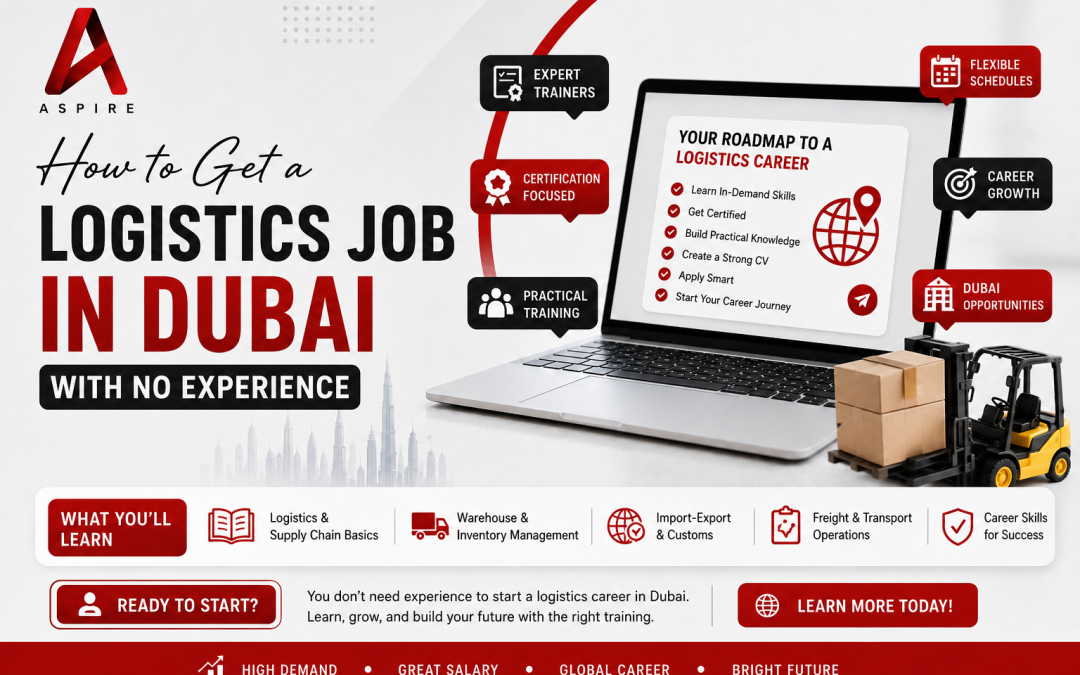
Dubai has emerged as one of the world’s leading logistics and supply chain management hubs, creating thousands of career opportunities for individuals looking to enter the logistics industry. With its strategic location connecting Europe, Asia, and Africa, world-class infrastructure, advanced seaports, international airports, and rapidly growing e-commerce sector, Dubai continues to experience strong demand for skilled logistics and supply chain professionals.
The growth of the logistics sector has increased the need for trained professionals in areas such as warehouse management, inventory control, procurement, transportation management, freight forwarding, supply chain operations, and distribution management. This has made logistics and supply chain management training in Dubai an excellent pathway for fresh graduates, career changers, and professionals looking to develop industry-relevant skills.
The good news is that you do not need years of previous experience to start a successful logistics career in Dubai. Many companies hire entry-level candidates who have completed professional logistics training courses, gained practical knowledge, and developed the essential skills required for modern supply chain operations.
A structured Logistics and Supply Chain Management training program can help you understand industry practices, improve your employability, and prepare you for roles such as Logistics Coordinator, Supply Chain Assistant, Warehouse Executive, Inventory Controller, Procurement Assistant, and Operations Executive.
In this comprehensive guide, you will learn how to get a logistics job in Dubai with no experience, the skills employers expect, the benefits of completing a logistics and supply chain management course in Dubai, and the practical steps needed to start your career in one of the UAE’s fastest-growing industries.
Why Logistics Is One of Dubai’s Fastest-Growing Industries
The UAE logistics market continues to expand due to several factors:
- Growth of global trade
- Expansion of e-commerce
- Smart warehousing and automation
- International freight forwarding
- Supply chain digitalization
- Increased demand for last-mile delivery
- Government investment in logistics infrastructure
These developments have created thousands of employment opportunities across multiple sectors.
Can You Get a Logistics Job Without Experience?
Yes.
Many employers recruit candidates with little or no experience for entry-level positions such as:
- Logistics Assistant
- Warehouse Assistant
- Inventory Controller
- Storekeeper
- Procurement Assistant
- Shipping Coordinator
- Logistics Coordinator
- Operations Assistant
- Supply Chain Assistant
- Documentation Executive
Most employers value practical skills, willingness to learn, and professional logistics and supply chain training over prior work experience.
Step 1: Understand the Logistics Industry
Before applying for jobs, it’s important to understand how logistics works.
Logistics involves planning, implementing, and managing the movement of goods from suppliers to customers. Supply chain management extends beyond logistics by coordinating procurement, production, warehousing, inventory, transportation, and customer delivery.
Understanding these concepts demonstrates genuine interest during interviews.
Step 2: Learn the Essential Logistics Skills
Recruiters in Dubai typically look for candidates who possess practical workplace skills.
The most valuable skills include:
- Inventory Management
- Warehouse Operations
- Procurement
- Transportation Management
- Shipping Documentation
- Freight Forwarding
- Supply Chain Fundamentals
- Vendor Management
- ERP Systems
- Microsoft Excel
- Data Analysis
- Communication Skills
- Problem Solving
- Time Management
- Team Collaboration
Developing these competencies significantly improves employability.
Step 3: Earn a Professional Certification
Professional certification can strengthen your profile, especially if you lack work experience.
A quality logistics training program should include:
- Supply Chain Fundamentals
- Warehouse Management
- Inventory Control
- Procurement Processes
- International Shipping
- Transportation Planning
- Import & Export Documentation
- Risk Management
- ERP System Introduction
- Real-world Case Studies
Employers often view certified candidates as more prepared for workplace responsibilities.
Step 4: Build Practical Experience
Experience doesn’t always come from a full-time job.
You can gain valuable exposure through:
- Training projects
- Simulated warehouse operations
- Internships
- Volunteer opportunities
- Freelance logistics support
- Supply chain case studies
- Academic projects
- Personal learning projects
Practical examples provide strong talking points during interviews.
Step 5: Create a Professional CV
A logistics CV should clearly demonstrate your skills and potential.
Include:
- Professional Summary
- Relevant Certifications
- Logistics Skills
- Computer Skills
- Training Projects
- Education
- Languages
- Achievements
Avoid lengthy personal information and focus on qualifications relevant to logistics roles.
Step 6: Optimize Your LinkedIn Profile
Many recruiters actively search for candidates on LinkedIn.
Optimize your profile by:
- Using a professional photo
- Writing a keyword-rich headline
- Adding logistics-related skills
- Listing certifications
- Sharing logistics insights
- Connecting with recruiters and industry professionals
An optimized LinkedIn profile can increase your visibility to hiring managers.
Step 7: Apply Strategically
Rather than applying to every vacancy, focus on roles that match your current skill level.
Suitable entry-level positions include:
- Warehouse Assistant
- Logistics Coordinator
- Inventory Clerk
- Procurement Assistant
- Operations Assistant
- Shipping Executive
- Documentation Officer
- Storekeeper
Tailor your CV and cover letter for each application.
Step 8: Prepare for Logistics Interviews
Employers often ask questions such as:
- What is the difference between logistics and supply chain management?
- How would you handle inventory discrepancies?
- What is FIFO and why is it important?
- How do you prioritize urgent shipments?
- Why do you want to work in logistics?
- How do you manage deadlines?
Practicing clear, structured answers will improve your confidence.
Industries Hiring Logistics Professionals in Dubai
Logistics professionals are employed across numerous industries, including:
- Retail
- Manufacturing
- Healthcare
- Aviation
- Construction
- Oil & Gas
- E-commerce
- FMCG
- Hospitality
- Government
- Third-Party Logistics (3PL)
- Freight Forwarding
This diversity provides multiple career paths for new professionals.
Career Growth Opportunities
A typical logistics career progression may look like this:
Warehouse Assistant
↓
Logistics Coordinator
↓
Inventory Controller
↓
Supply Chain Executive
↓
Operations Manager
↓
Supply Chain Manager
↓
Logistics Director
Continuous learning and professional development can accelerate advancement.
Common Mistakes to Avoid
Many job seekers delay their success by making avoidable mistakes.
Avoid:
- Applying without relevant skills
- Sending the same CV to every employer
- Ignoring LinkedIn networking
- Failing to prepare for interviews
- Not understanding logistics terminology
- Waiting for the “perfect” opportunity instead of gaining experience
Expert Tips for Landing Your First Logistics Job
Industry experts recommend focusing on employability rather than simply collecting certificates.
Practical advice includes:
- Learn Microsoft Excel to an intermediate level.
- Familiarize yourself with warehouse management concepts.
- Understand inventory control methods such as FIFO and cycle counting.
- Stay informed about supply chain trends, automation, AI, and sustainability.
- Develop strong communication and problem-solving skills.
- Network with logistics professionals and recruiters.
- Continue learning through certifications and industry events.
Employers consistently value candidates who demonstrate curiosity, adaptability, and a commitment to professional growth.
Interested in building a career in logistics? Explore our Logistics and Supply Chain Management training program to learn more about the course, skills covered, and enrollment details.
Frequently Asked Questions
Can I get a logistics job in Dubai without experience?
Yes. Many employers hire entry-level candidates who have relevant training, transferable skills, and a positive attitude.
What qualifications do I need?
While requirements vary by role, a professional logistics certification, basic computer skills, and knowledge of supply chain principles can improve your chances.
Is logistics a good career in Dubai?
Yes. The logistics sector remains one of Dubai’s most dynamic industries, offering diverse career paths and long-term growth opportunities.
What skills are most important?
Employers frequently seek candidates with knowledge of inventory management, warehouse operations, procurement, transportation, ERP systems, Microsoft Excel, communication, and analytical thinking.
Is certification necessary?
Certification is not always mandatory, but it can make your profile more competitive, particularly for candidates without prior experience.
Final Thoughts
Starting a logistics career in Dubai without experience is achievable with the right preparation. By developing practical skills, earning relevant certification, understanding industry fundamentals, and presenting yourself professionally, you can significantly improve your chances of securing an entry-level role.
The logistics industry rewards continuous learning and adaptability. Whether your goal is to work in warehousing, procurement, transportation, or supply chain management, investing in your skills today can open the door to a rewarding and future-focused career.